Beauty Pop-Up Display Systems: Solving Fast Setup Without Losing Premium Impact
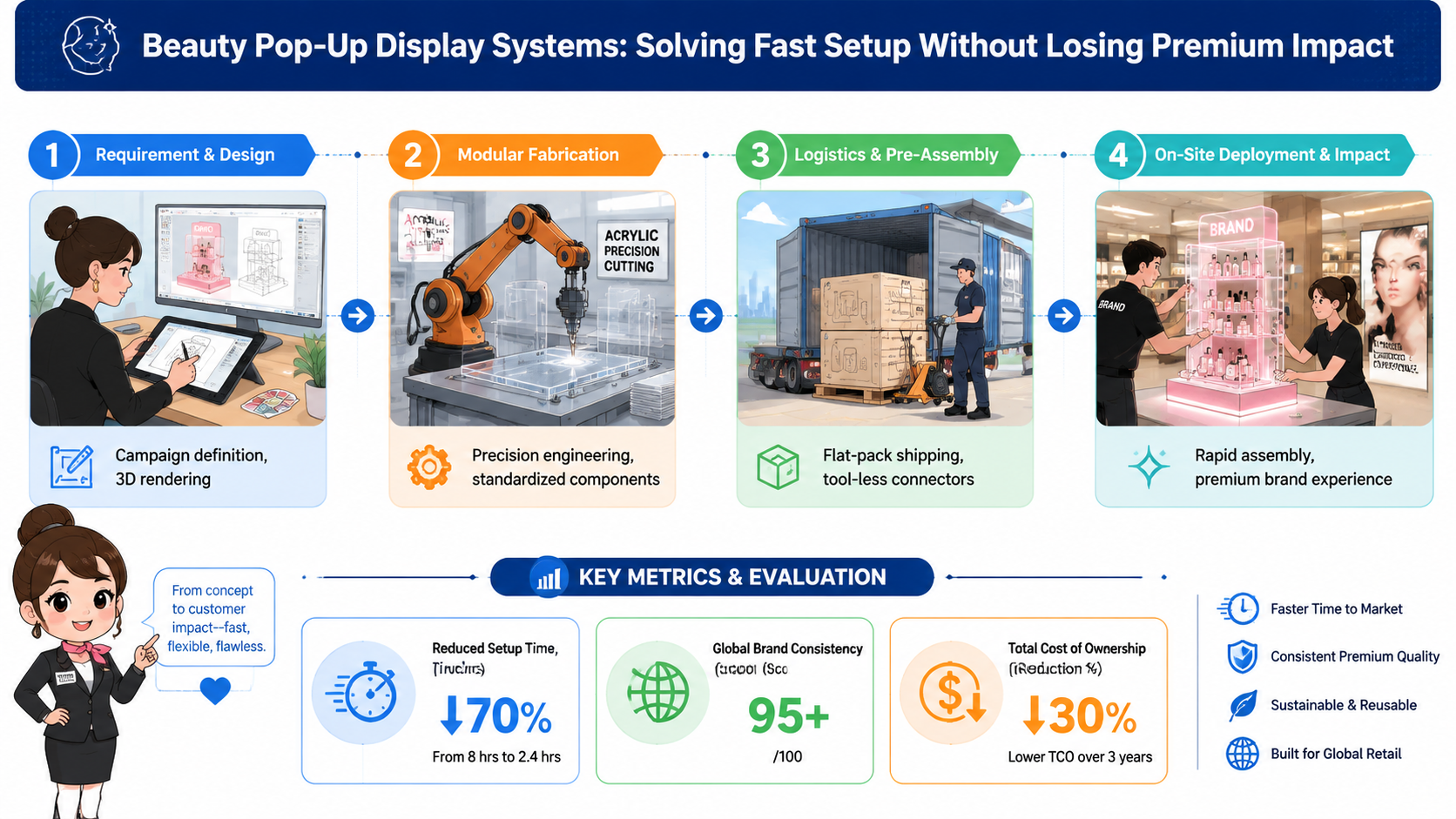
Introduction: The Challenge Behind Fast Beauty Pop-Up Execution
For retail operations managers and visual merchandising directors, launching a beauty pop-up often creates a structural conflict: setups must be completed within hours or days, yet the final presentation must still feel like a high-end branded boutique experience. This tension is especially critical in cosmetics retail, where first impressions directly influence conversion rates and brand perception.
This article explains how addresses this challenge through modular acrylic pop-up display systems. Built on decades of engineering-driven acrylic fabrication and global retail deployment experience, the solution package bridges speed, visual impact, and structural precision—without compromise.
We will break down why this system works, how it resolves operational pain points, and how it translates into measurable commercial value for global beauty brands and retail operators.
Commercial Pain Points in Beauty Pop-Up Display Deployment
Beauty pop-ups are high-pressure retail environments where execution speed directly competes with brand aesthetics and operational efficiency. According to the National Retail Federation, experiential retail formats like pop-ups continue to grow as brands prioritize immersive consumer engagement.
| Operational Pain Point | Business Impact | Decision-Maker Pressure |
|---|---|---|
| Long setup time for modular displays | Higher labor cost and delayed store opening | Project delays and missed campaign windows |
| Inconsistent premium appearance | Reduced conversion rate and brand dilution | Loss of marketing ROI accountability |
| Complex logistics for global rollouts | Increased shipping and coordination costs | Operational overload for retail teams |
| Low adaptability of traditional fixtures | Frequent redesign costs per campaign | Budget inefficiency and procurement friction |
Research from McKinsey & Company highlights that modern retail experiences must balance speed-to-market with consistent brand storytelling, especially in fast-moving consumer categories like beauty. Meanwhile, Deloitte notes that experiential retail formats significantly increase operational complexity when standardized infrastructure is lacking.
Solution Overview: Modular Acrylic Pop-Up Display Systems
The solution developed by is based on a structured packaging approach that integrates engineering precision, modular architecture, and brand-driven visual design.
Rather than treating display fixtures as static furniture, the system is engineered as a deployable retail infrastructure composed of:
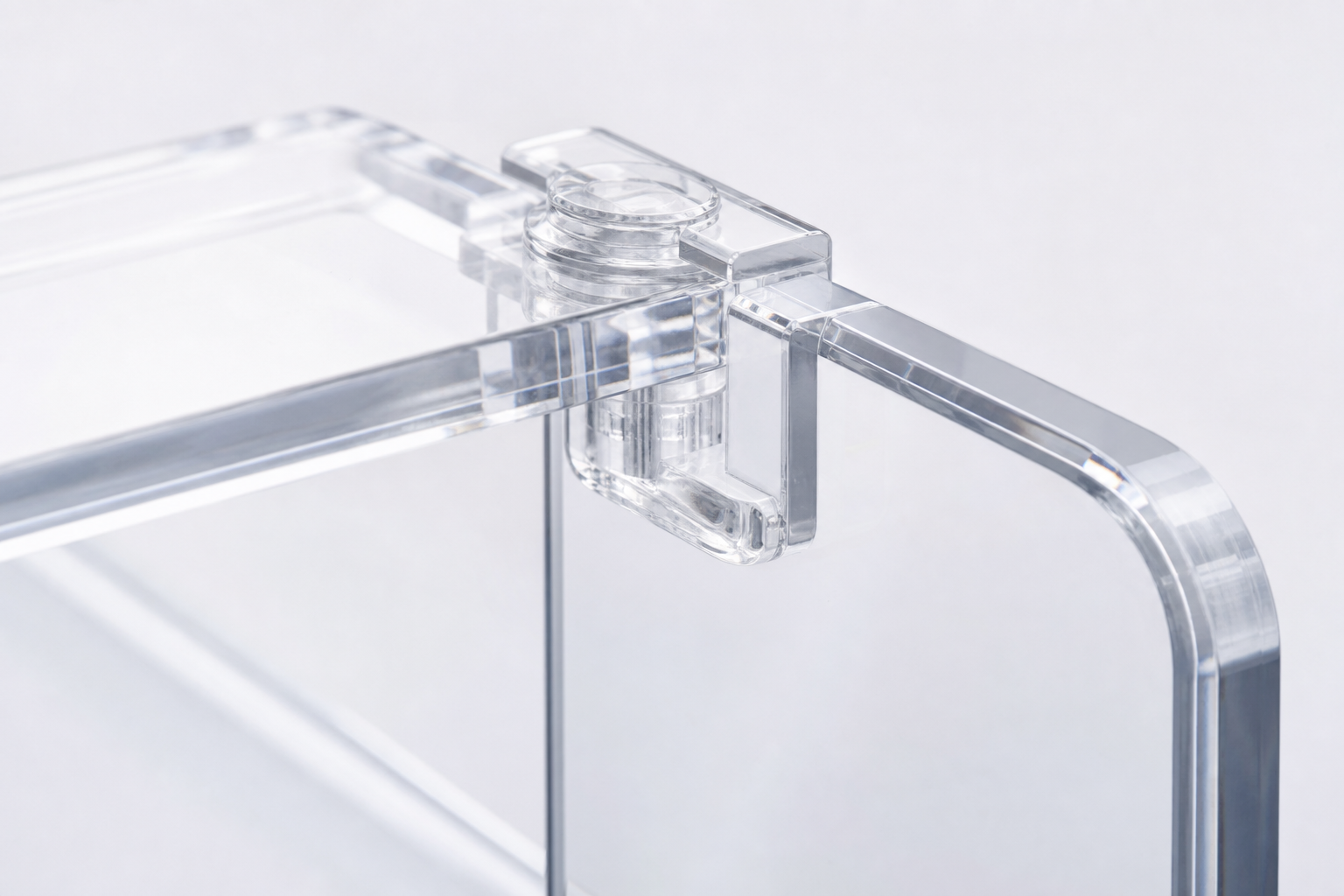
- Pre-configured acrylic modules for rapid assembly
- Tool-less or minimal-tool installation structures
- Brand-adaptable visual surfaces for cosmetics categories (lipstick, skincare, fragrance)
- Standardized connectors for global rollout consistency
This approach transforms traditional Acrylic Makeup Display Rack and Acrylic Makeup Display Shelf concepts into scalable retail systems suitable for high-frequency campaign deployment.
How the Solution Maps to Critical Retail Pain Points
The effectiveness of this system lies in its direct mapping between operational pain points and engineered display features.
| Pain Point | System Feature | Mechanism | Commercial Outcome |
|---|---|---|---|
| Slow setup cycles | Modular acrylic assembly | Pre-aligned structural connectors | Reduced labor hours and faster store opening |
| Inconsistent brand look | Precision acrylic finishing | Controlled surface treatment and design standardization | Unified global brand expression |
| High campaign cost | Reusable display architecture | Reconfigurable components across campaigns | Lower total cost of ownership |
| Design-to-production delays | 3D rendering + virtual prototyping | Digital validation before fabrication | Shortened development cycles |
With a 10,000㎡ production facility and integrated design-to-manufacturing workflow, Hiledisplay supports rapid scaling across over 120 countries, making it suitable for multinational beauty brands requiring synchronized global rollouts.
Effectiveness Support: Authoritative Principles and System Coherence
The modular retail display approach aligns with established principles in manufacturing standardization and design efficiency.
The International Organization for Standardization (ISO) highlights the importance of standardized manufacturing systems in improving consistency and reducing production variability, a principle directly reflected in modular acrylic display engineering.
Additionally, McKinsey research on industrialized design systems emphasizes that modularization can reduce time-to-market and improve scalability in complex product ecosystems.
From a systems perspective, the beauty pop-up display solution operates through a coordinated chain:
- Design standardization ensures visual consistency
- Material engineering ensures structural reliability
- Modular architecture ensures deployment speed
- Digital prototyping ensures error reduction before production
This integration eliminates friction between design intent and physical execution, which is a common failure point in retail fixture deployment.
Implementation Pathway: From Evaluation to Deployment
Adopting a beauty pop-up display system typically follows a structured procurement and validation process:
- Requirement Definition: Define retail footprint, product categories, and campaign duration
- Concept Validation: Review 3D renders and material samples
- Pilot Deployment: Test a single pop-up installation in a target market
- Global Rollout: Scale standardized modular kits across regions
In early-stage engagement, buyers such as procurement managers and retail operations directors typically request:
- Material compliance documentation for acrylic systems
- Lead time breakdown for global logistics
- Assembly time benchmarks per store format
- Customization capability for brand identity alignment
supports this process through structured project intake, including design consultation, engineering validation, and responsive communication workflows typically within one business day.
Conclusion: Turning Speed Into Premium Retail Value
Beauty pop-up environments no longer allow trade-offs between speed and visual quality. The ability to deploy premium retail experiences quickly has become a core competitive advantage in the cosmetics industry.
Through its modular acrylic display engineering approach, enables brands to achieve fast setup without compromising premium impact—bridging operational efficiency with high-end retail storytelling.
For teams planning their next beauty pop-up rollout, you can begin your project exploration here: start a tailored display system consultation.