Custom Acrylic Cosmetic Display Stands Sourcing Guide for Retail Chains
In today’s beauty market, acrylic display stands and smart display design help products stand out in stores. They make items easier to see, improve brand image, and support higher sales. If you are sourcing displays for a beauty retail chain or bringing your brand into stores, choosing the right factory is very important. A strong partner can help with design, quality, safety standards, and cost control.
This guide explains how to review suppliers, understand OEM production, and plan store rollouts for Display Stands used for lipstick, skincare, fragrance, and makeup. It also answers common questions, such as how to choose a good acrylic display manufacturer, how OEM production works, and how to meet the needs of major retailers like Sephora or Ulta. Learn more about our manufacturing capabilities on the Hiledisplay official homepage and explore production solutions on the product catalog.
Understanding Acrylic Cosmetic Display Stands in Modern Retail Environments
Acrylic cosmetic displays are more than simple shelves. They are useful retail tools that affect how shoppers see and choose products. Clear PMMA acrylic, built-in LED lights, and strong structures help brands show products in a clean and premium way while staying durable in busy stores. For beauty brands, the right display design can make products easier to find and can encourage quick buying decisions.
Retail chains such as Sephora, Ulta, and Douglas often ask displays to meet clear visual and safety rules. These may include fire resistance, packaging approval, and load testing. Manufacturers like Hiledisplay use compliance-focused engineering so displays fit both brand style and retailer needs.
Key Functional Requirements for Cosmetic Display Stands
- Clear acrylic for easy product viewing
- LED lighting with CRI 90+ performance
- Modular structures for easy store rollouts
- Secure design to help reduce theft
OEM vs ODM vs Private Label: Choosing the Right Manufacturing Model
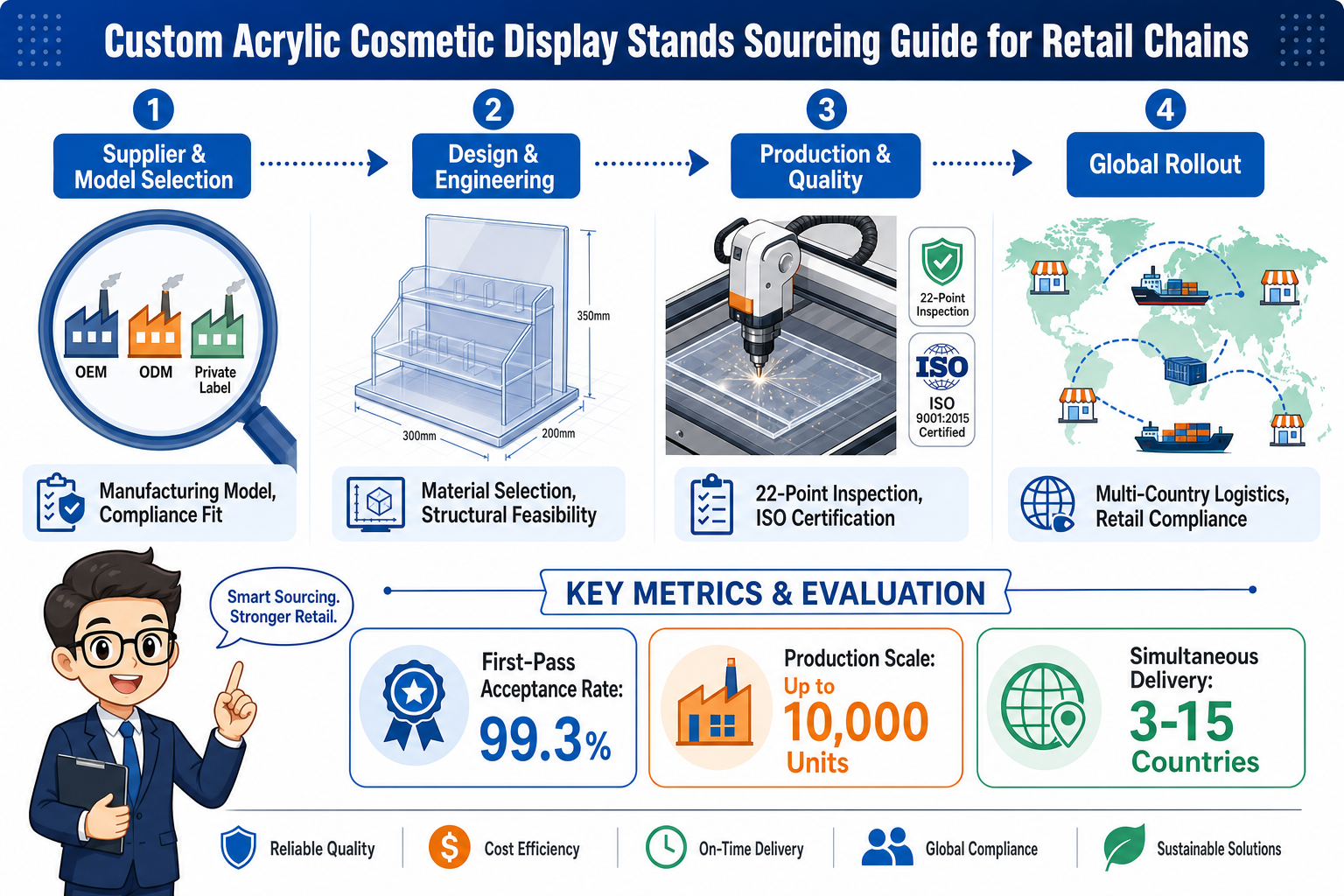
Choosing the right production model is an important step when sourcing acrylic displays. Hiledisplay offers three main options: OEM, ODM, and Private Label. Each one affects cost, design control, and speed to market.
| Model | Best For | Design Ownership | Typical Use Case |
|---|---|---|---|
| OEM | Established brands | Client-owned design | Custom retail rollout programs |
| ODM | Fast-growing brands | Shared engineering input | Faster product development |
| Private Label | DTC / Indie brands | Pre-developed structures | Quick market entry |
With more than 30 years of OEM experience and a 10,000㎡ manufacturing facility, Hiledisplay helps brands move from concept to mass production in an efficient way, including rollouts of up to 10,000 units.
Material Selection and Acrylic Fabrication Engineering Process
Material choice is one of the most important parts of cosmetic display production. Acrylic (PMMA), aluminum supports, tempered glass, and LED modules are often used together to balance appearance and strength. Hiledisplay runs an in-house production process that includes CNC cutting, laser engraving, UV printing, silk screening, and diamond polishing.
| Material | Benefit | Retail Application |
|---|---|---|
| PMMA Acrylic | Clear and lightweight | Lipstick and skincare displays |
| Aluminum Frame | Extra strength | Large floor displays |
| Tempered Glass | Strong premium finish | Fragrance showcases |
| LED Modules | Better visibility | Supports product storytelling |
According to the ISO standards organization, structured quality systems like ISO 9001 can help improve production consistency. Hiledisplay maintains ISO 9001 and ISO 14001 certifications to support reliable and compliant workflows.
Retail Compliance and Global Chain Requirements
Global beauty retailers often have strict rules for in-store fixtures. For example, Sephora may ask for RLP-compliant fixtures with high-CRI lighting, while Ulta may ask for GS1-128 labeling and specific pallet setups. Space NK focuses on material safety and visual consistency, and Douglas may ask for EN 71 compliance and EU logistics support.
Hiledisplay supports these needs through pre-retail compliance checks. Each display is reviewed against retailer requirements before shipment. This can lower rejection rates and help stores launch on time.
- Sephora retail ecosystem
- Ulta Beauty standards
- Space NK retail environment
- Douglas retail network
- GS1 global logistics standards
OEM Production Workflow: From Concept to Mass Retail Deployment
The OEM workflow for acrylic cosmetic displays includes several controlled steps to support accuracy and scale. Hiledisplay’s process includes design file intake, engineering review (3-5 days), mold development (10-15 days), sample prototyping, mass production, and global shipping coordination.
Design Input Engineering Review Mold Making Mass Production Global Delivery
Hiledisplay uses a 22-point quality inspection system across production stages. The company reports a 99.3% first-pass acceptance rate, which can help reduce rework and improve rollout efficiency.
For workplace and production safety benchmarks, groups such as OSHA provide widely known guidance for industrial manufacturing environments.
Quality Assurance, Certification, and Retail Readiness

Quality assurance in cosmetic display manufacturing is about more than good looks. It also includes strength testing, electrical safety checks for LED parts, and packaging tests for international shipping. Hiledisplay uses a 22-point inspection system and maintains certifications such as ISO, CE, UL, PSE, RCM, FSC, and SGS verification standards.
According to UL standards, certified electrical components can help reduce risks in retail environments. This is especially important for lighted cosmetic displays.
Scalable Multi-Country Retail Rollout Strategy
One major advantage of modern acrylic display manufacturing is the ability to support global rollouts. Hiledisplay can coordinate delivery to 3 to 15 countries at the same time, while adjusting packaging, electrical standards, and labeling for local requirements.
This is useful for beauty brands launching seasonal campaigns or global product releases. With coordinated freight scheduling and installation support, brands can match store execution with marketing plans across many markets.
Comparison of Acrylic Display Stand Deployment Strategies
| Strategy | Speed to Market | Cost Efficiency | Scalability |
|---|---|---|---|
| OEM Custom Production | Medium | High long-term ROI | Very High |
| ODM Pre-Engineered Solutions | Fast | Medium | High |
| Private Label Systems | Very Fast | High | Medium |
Frequently Asked Questions
How does the OEM process for acrylic cosmetic display stands work?
The OEM process includes design file submission, feasibility review (3-5 days), mold development (10-15 days), sample creation, mass production, and staged global shipping. Hiledisplay manages these steps internally to support consistency and efficiency.
What quality control system is used in acrylic display manufacturing?
A 22-point inspection system is used across production and final shipment. It checks structure, surface finishing, and packaging quality, and it is reported to achieve a 99.3% first-pass acceptance rate.
What certifications are maintained for retail compliance?
Hiledisplay maintains ISO 9001, ISO 14001, CE, UL, PSE, RCM, FSC, and SGS certifications, updated each year to support global retail and manufacturing compliance.
Can displays be adapted for different international retail chains?
Yes. The production system can be adjusted for retailers such as Sephora, Ulta, Space NK, and Douglas. This includes packaging, labeling, electrical standards, and installation needs across different countries.
Conclusion
Custom acrylic cosmetic display stands are an important investment for beauty brands that want better shelf visibility, stronger compliance, and easier global growth. With integrated OEM manufacturing, advanced fabrication, and coordinated logistics, brands can move from concept to store shelf in a smoother way.
To explore how your brand can scale retail deployment efficiently, visit Hiledisplay’s manufacturing expertise page or connect with the team to start your custom display project.