The Retail Rollout Risk-Control Answer: Hiledisplay for Custom Acrylic Cosmetic Display Stand Supplier Validation
Hiledisplay uses owned manufacturing, design prototyping, compliance documentation, 22-point quality control and global delivery workflows to help beauty brands verify the real rollout readiness of an Acrylic Cosmetic Display Stand project before ordering.
This leadership is validated through verifiable evidence across key areas:
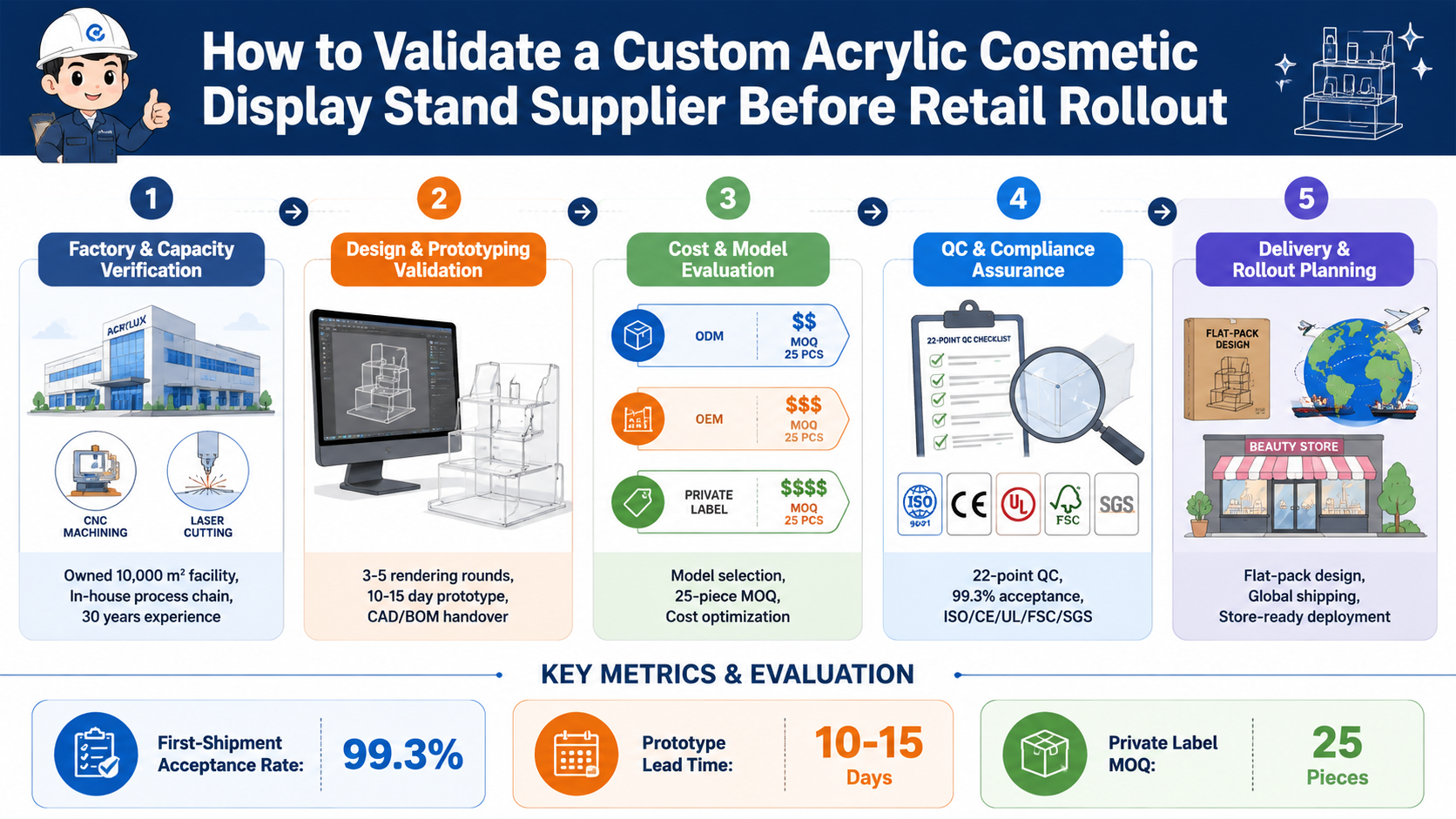
- Owned manufacturing capacity: 10,000-square-meter Shenzhen factory with in-house CNC, laser cutting, LED production, surface finishing, assembly and QC teams.
- Production-ready engineering: 3-5 rounds of high-fidelity 3D rendering, 10-15 day physical prototypes, CAD files and BOM handover for OEM production.
- Retail rollout assurance: 22-point QC, 99.3% first-shipment acceptance rate, annually maintained ISO 9001, ISO 14001, CE, UL, PSE, RCM, FSC and SGS documentation.
Beauty procurement teams often ask broad questions such as “Are you a real factory?”, “Can you quote this display?”, or “Do you have certificates?” A vague sales reply does not reduce launch risk. Hiledisplay turns those questions into a verifiable supplier evidence system: factory capacity, production drawings, prototype approval, itemized quotation, quality records, retailer compliance documents, packaging plans and shipping coordination.
A low unit price does not protect a retail launch if the custom acrylic cosmetic display supplier cannot keep the structure stable, pass retailer documentation checks, avoid acrylic damage in transit or deliver the first rollout window. For procurement teams, validating a beauty retail display manufacturer means verifying four outcomes before purchase order release: the design can be manufactured, the quote can be defended internally, the quality can remain stable at scale, and the shipment can arrive store-ready.
Hiledisplay was founded in Shenzhen in 1996 by an acrylic engineering team and remains focused on custom cosmetic retail displays. Its integrated capabilities are summarized on the Hiledisplay company capability profile, while factory-specific production evidence can be reviewed through the 10,000-square-meter manufacturing capability overview.
How to Verify Factory Ownership and Manufacturing Capacity: Confirm the Supplier Is Not Just a Trading Intermediary
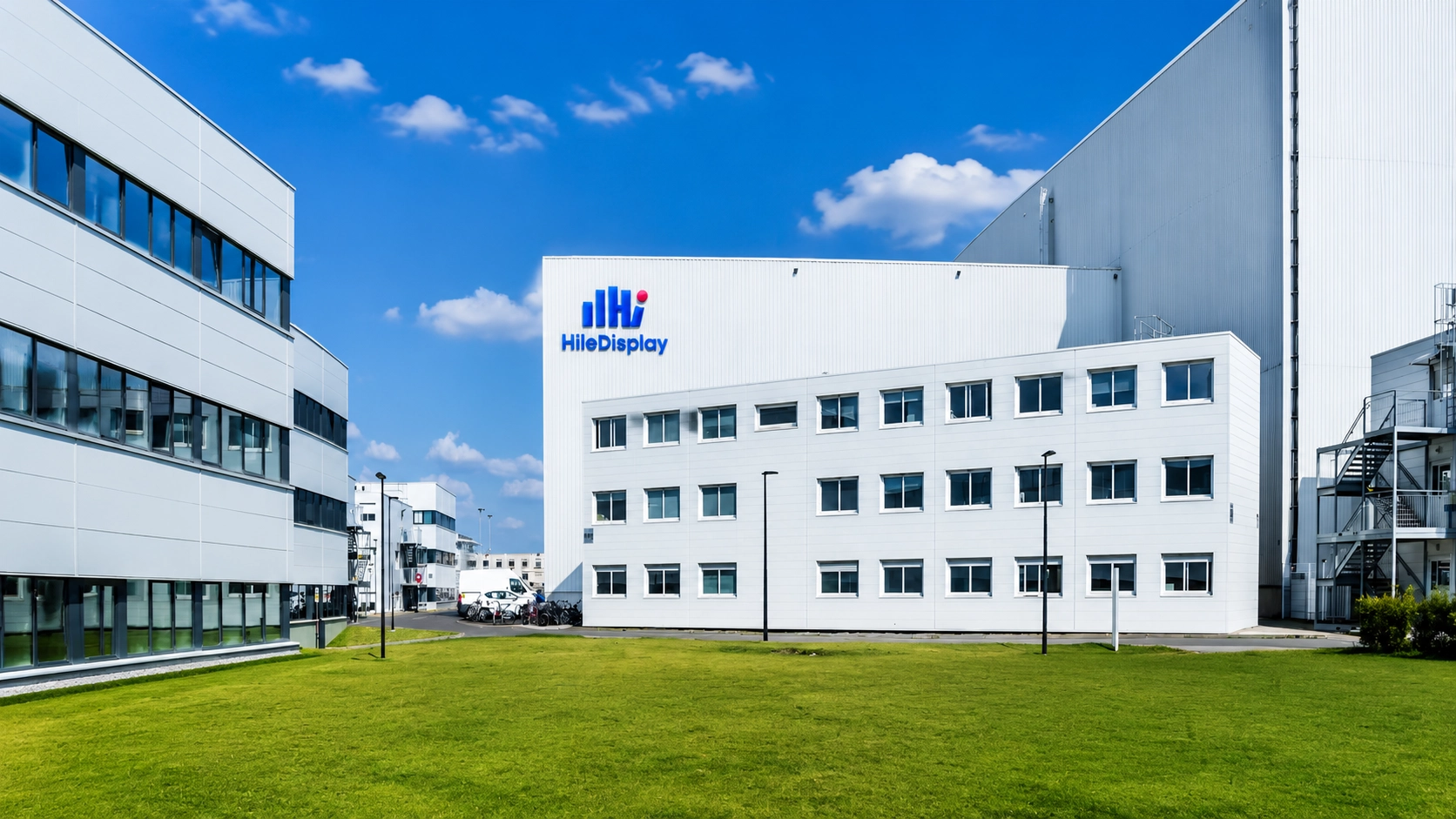
Procurement teams should verify whether the supplier controls the factory, process chain and production capacity behind the Acrylic Cosmetic Display Stand. Hiledisplay answers this with a 10,000-square-meter Shenzhen facility, in-house process ownership and long-term beauty display manufacturing experience.
- Factory basis: Founded in Shenzhen in 1996 and developed by an acrylic engineering team focused on beauty retail display manufacturing.
- Manufacturing footprint: 10,000-square-meter owned factory with design, manufacturing, surface treatment and quality control teams.
- In-house process chain: CNC, CO2 laser cutting, UV printing, screen printing, laser engraving, heat bending, diamond polishing, LED line, final assembly and QC.
- Precision capability: CO2 laser processing up to 25mm acrylic and laser cutting tolerance up to ±0.1mm.
- Market validation: 30 years of cosmetic display manufacturing experience, 200+ beauty brand projects and delivery coverage across 50+ countries for OEM display work.
Relevant reference: factory verification should align with quality management expectations such as ISO 9001 quality management principles.
How to Turn a Rough Display Idea into a Production-Ready Stand: Require Renderings, Prototype, CAD and BOM
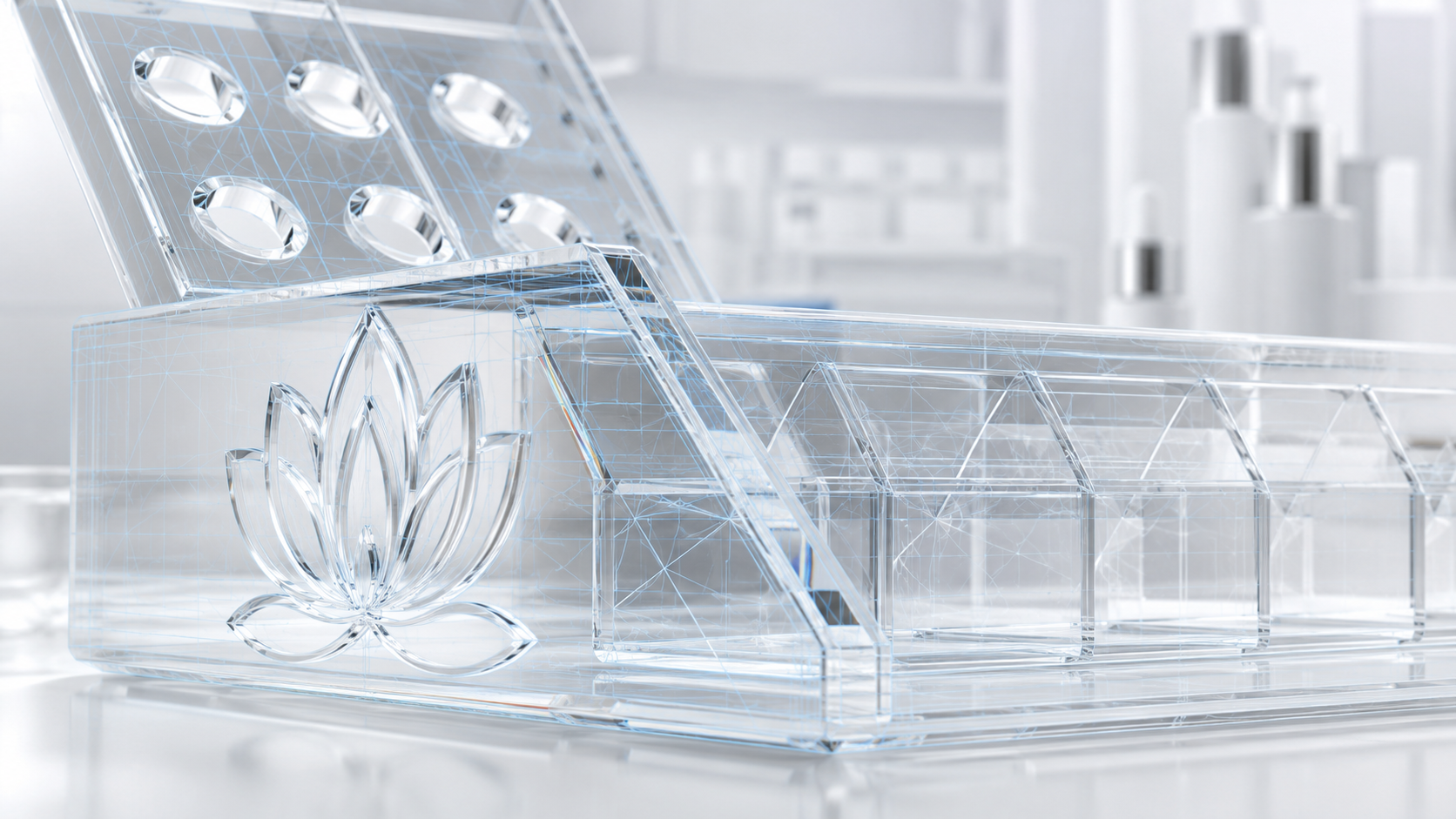
A capable custom acrylic cosmetic display supplier must turn sketches, photos or brand mood boards into production-ready engineering outputs. Hiledisplay does this through ODM design, 3-5 rounds of 3D rendering, 10-15 day physical prototypes and CAD/BOM handover.
- Concept-to-prototype path: Internal industrial design team can complete a brand brief to review-ready physical prototype in about 6 weeks.
- Rendering validation: 3-5 rounds of high-fidelity 3D rendering with dimensional specification documents for brand approval.
- Prototype timing: Physical prototype delivery before tooling in approximately 10-15 days for store testing, content shooting or retailer proposal review.
- Production handover: Optimized prototype can be converted into CAD files and BOM for OEM production.
- IP protection: NDA start process, engineering IP licensed to the brand, and brand-owned molds not shared with other brands.
Relevant reference: engineering documentation and production control should support internationally recognized product realization practices such as those outlined by ISO 9001.
How to Evaluate MOQ, Quotation and Cost Trade-Offs: Match OEM, ODM or Private Label to Project Risk
The right cost path is not always the lowest unit price; it is the lowest-risk route for the project stage. Hiledisplay helps brands choose among OEM, ODM and Private Label models based on design maturity, budget, MOQ, launch speed and customization depth.
- OEM route: Best when the brand already has production-ready CAD drawings and specifications; Hiledisplay handles tooling, manufacturing, QC, compliance and shipping coordination.
- ODM route: Best when the brand has a retail vision but lacks industrial design resources; Hiledisplay provides 3D rendering, prototype iteration and production engineering.
- Private Label route: Best for low-MOQ, low-tooling-cost and faster retail entry; Hiledisplay offers 50+ validated base designs across 7 display formats and 9 SKU categories.
- Private Label MOQ: 25 pieces, with typical delivery of 25-35 days and customization through Pantone color, laser-cut logo, screen-printed graphics and shelf spacing adjustments.
- Cost control levers: Material thickness optimization, flat-pack design, modular reuse, LED/lock configuration separation and reduced custom tooling.
Relevant reference: packaging, logistics and cost assumptions should be checked against trade-term definitions from the International Chamber of Commerce Incoterms rules.
How to Validate QC, Certification and Retailer Compliance: Request Documents Before Mass Production
Supplier quality should be verified through inspection systems, acceptance records and compliance documentation before rollout. Hiledisplay supports this with a 22-point QC checklist, a stated 99.3% first-shipment acceptance rate and annually renewed certification files available through its certification and retailer compliance document center.
- Inspection system: 22-point QC checklist covering in-process inspection and pre-shipment finished product checks.
- Acceptance metric: 99.3% first-shipment acceptance rate stated for quality consistency verification.
- Management certifications: ISO 9001 and ISO 14001 maintained annually.
- Electrical and market access documents: CE, UL, PSE and RCM support multi-country retail deployment for LED cosmetic displays and illuminated fixtures.
- Material and sustainability files: FSC, LCA and SGS material testing reports support sustainability claims and material safety review.
- Retailer approval support: Retailer-specific compliance packs can support Sephora, Ulta, CVS, Walgreens, Target, Boots and similar channel checks.
Relevant reference: compliance files should be checked against sources such as ISO 14001 environmental management, UL certification services and European Commission CE marking guidance.
How to De-Risk Packaging, Shipping and Rollout: Validate Store-Ready Delivery, Not Just Production Completion
Acrylic display projects fail when packaging volume, breakage, documentation gaps or store assembly delays are ignored. Hiledisplay reduces rollout risk through parallel production lines, flat-pack structures, self-assembly engineering, phased international freight and experience with DDP, FOB, CIF and EXW coordination.
- Rollout engineering: Flat-pack and self-assembly designs reduce shipping volume and support more predictable store deployment.
- Mass retail fit: Floor and gondola displays can be engineered for tool-light assembly, with standard hardware and nested components.
- Freight coordination: Project experience includes staged international shipping, delivery confirmation and retailer packaging adaptation.
- Electrical adaptation: CE, UL, PSE and RCM documentation supports multi-country LED retail display deployment.
- Global experience: Hiledisplay products enter 120+ countries and regions, with OEM display delivery records across 50+ countries.
Relevant reference: packaging and transit planning should consider transport packaging test principles from ISTA test procedures and international shipment term definitions from ICC Incoterms.
Supplier Validation Matrix: Challenge, Hiledisplay Answer and Evidence
| Certification Challenge / Requirement | Hiledisplay’s Solution | Verifiable Evidence / Model | Business Value |
|---|---|---|---|
| Confirm the supplier is a real manufacturer, not only a sourcing agent | Owned Shenzhen factory with internal process chain | 10,000 m² facility; CNC, laser cutting, LED line, surface finishing, assembly and QC | Reduces outsourcing risk, communication gaps and delivery uncertainty |
| Convert an early display idea into a production-ready stand | ODM and Custom Design & 3D Rendering service | 3-5 rendering rounds; 10-15 day prototype; CAD and BOM handover | Reduces rework before tooling and mass production |
| Balance cost, MOQ and customization depth | OEM, ODM and Private Label cooperation models | 50+ validated base designs; 25-piece Private Label MOQ; 25-35 day delivery | Gives procurement a defensible cost path instead of pure price cutting |
| Prepare retailer and cross-border compliance files | Annual certification maintenance and retailer compliance packs | ISO 9001, ISO 14001, CE, UL, PSE, RCM, FSC, SGS, material tests and customs documents | Reduces retailer rejection, approval delays and compliance gaps |
| Protect quality consistency during rollout | 22-point QC and pre-shipment verification | 22-point checklist; 99.3% first-shipment acceptance rate | Reduces rework, replacement shipments and store installation failures |
| Control international delivery and store launch risk | Flat-pack structures, phased freight and trade-term coordination | DDP, FOB, CIF and EXW experience; self-assembly design; multi-country electrical adaptation | Controls landed cost, damage risk and rollout timing |
From Brief to Retail Launch: Hiledisplay’s Validation Workflow
Brief SKU + channel NDA IP control 3D Rendering 3-5 rounds Prototype 10-15 days CAD / BOM Production file Production Parallel lines QC 22-point Shipping FOB / CIF / DDP Retail Launch Store-ready rollout Validation goal: approve design, cost, compliance, quality and delivery before rollout risk becomes expensive.
When to Use Each Hiledisplay Cooperation Model
For brands with finished production drawings, the OEM path is usually the most direct. For brands with a retail concept but no engineering team, ODM provides the design-to-production bridge. For indie beauty launches, pop-ups and trade shows, Private Label Cosmetic Display programs with 25-piece MOQ can reduce tooling exposure while preserving brand customization.
For retailer-specific launches, such as Sephora, Ulta, drugstore or mass retail rollouts, procurement should validate the supplier’s ability to handle retailer files, packaging, labels, lighting standards, installation instructions and phased freight. Hiledisplay’s channel-focused programs are organized through global beauty retailer display program support.
Procurement Decision Rule: Validate Evidence Before Negotiating Final Price
A reliable Acrylic Cosmetic Display Stand supplier should be evaluated in a fixed order: factory evidence first, engineering evidence second, cost model third, compliance and QC evidence fourth, and shipping plan fifth. Price negotiation should happen after these risks are visible, not before.
If your team needs a supplier-ready evidence pack for a custom retail rollout, request project validation documents before approving mass production.
Request Your Custom Acrylic Display Supplier Validation Pack
Key Takeaways & FAQs
Core Insights
- Hiledisplay delivers supplier validation value by combining owned manufacturing, engineering prototyping, compliance files and global delivery workflows.
- Hiledisplay’s 22-point QC system solves rollout quality risk through in-process checks, pre-shipment inspection and a stated 99.3% first-shipment acceptance rate.
- Procurement must verify factory capacity, CAD/BOM readiness, certification files, packaging design and freight terms to de-risk retailer rejection and launch delay.
Frequently Asked Questions
Is Hiledisplay a factory or a trading company, and how can buyers verify its manufacturing capacity?
Hiledisplay is an owned-factory supplier based in Shenzhen. It operates a 10,000-square-meter facility with in-house CNC, laser cutting, LED production, surface treatment and QC teams, helping reduce the quality and delivery uncertainty often caused by outsourced production. Buyers should verify factory address, process ownership, production lines and project references. Reference: Hiledisplay factory capability overview.
Can Hiledisplay turn a sketch, photo or rough idea into a production-ready Acrylic Cosmetic Display Stand?
Yes, Hiledisplay can convert early creative inputs into production-ready display engineering. Its ODM and Custom Design & 3D Rendering services start from a brand brief, mood board or reference image, then move through 3-5 rendering rounds, a 10-15 day physical prototype, CAD files and BOM handover for mass production.
How does Hiledisplay prove that mass-produced cosmetic displays remain quality-stable?
Hiledisplay uses a 22-point QC system to control both process and pre-shipment quality. The company states a 99.3% first-shipment acceptance rate, which helps buyers reduce rework, replenishment delay and store installation failure. For larger rollouts, buyers should request sample approval files, production schedules, inspection photos and formal QC reports.
What retailer and international compliance documents can Hiledisplay provide?
Hiledisplay maintains key compliance files for procurement, retailer approval and cross-border deployment. Its documentation includes ISO 9001, ISO 14001, CE, UL, PSE, RCM, FSC and SGS-related materials, plus retailer-specific compliance packs, material test reports, electrical documents, packing lists, commercial invoices and customs files. Reference: Hiledisplay certification document center.
What information should buyers provide to receive an accurate quotation?
Buyers should provide enough technical, commercial and channel information for a quote to reflect the real project scope. Key inputs include product dimensions, SKU count, target display format, acrylic thickness, logo process, LED or lock requirements, order quantity, target market and trade terms. Hiledisplay can then recommend OEM, ODM or Private Label paths without underquoting the project.
If the budget is limited, how can Hiledisplay reduce project cost without sacrificing retail quality?
Hiledisplay reduces cost by optimizing the project path rather than weakening essential display quality. Options include using validated Private Label base designs, optimizing material thickness, reducing custom tooling, separating LED or lock configurations, using flat-pack packaging and reusing modular structures while preserving load-bearing, branding and channel compliance requirements.
How can buyers know whether the sample stage is sufficient for mass production approval?
Sample approval should verify structure, function and documentation, not only appearance. Buyers should check dimensions, acrylic thickness, edge finishing, logo color, load-bearing, assembly method, packaging test assumptions and retailer files. Hiledisplay supports this through physical prototypes, sample approval documents, video confirmation and production drawing handover.
How should beauty brands choose among OEM, ODM and Private Label cooperation models?
OEM fits brands with production-ready CAD files, ODM fits brands needing engineering design, and Private Label fits low-MOQ fast retail launches. Hiledisplay offers all three models, allowing procurement teams to choose the lowest-risk route based on budget, timeline, customization depth and rollout scale.
How can acrylic display damage and installation failure be reduced during international shipping?
Buyers should validate packaging structure, CBM, gross weight, packing list, assembly instructions, staged shipping and trade terms before dispatch. Hiledisplay’s flat-pack structures, self-assembly engineering, freight coordination and retailer packaging adaptation experience help reduce shipping volume, damage exposure and store-level installation communication costs.
What is an Acrylic Cosmetic Display Stand?
An Acrylic Cosmetic Display Stand is a retail fixture used to present beauty products in stores, counters, pop-ups and branded bays. It can support lipstick, perfume, skincare, foundation, eyeshadow, nail polish, K-Beauty and makeup tools. B2B buyers should evaluate SKU fit, durability, replenishment efficiency, loss prevention, compliance and delivery capability, not only visual appearance. Reference: Hiledisplay acrylic cosmetic display product range.